Monday, December 16, 2013

Recognize when you got it right!

high five!
How often to you pause to think back on your personal or professional decisions over the previous period and reflect on the outcomes?

You should! Why? Because it can be a source of motivation and inspiration. All to often we're given plenty of reasons as to why we're not going to see that promotion or raise. Or we needlessly reflect on the decisions that resulted in the opposite of our efforts.

Yes there's something to be said about learning from one's mistakes. As with most things in your life, balance is a good idea. So balance out with some personal recognition. Celebrate, even if just for a few minutes, mentally what went your way and why.

For example, earlier this year at around pay raise time I contemplated purchasing a new car. Something new, fresh and exciting. I didn't need a new car. It would have been a nice reward to myself for all the work I'd done the previous year. What held me back from that significant purchase was the uncertainty in my current role. I was icing on the cake and I knew it. I was most certainly underemployed - underutilized on talent and skills - I had to seek out challenge myself. My functional area was extremely specialized and not valued by our divisional VP. And, I only really enjoyed about 1/3 of my responsibilities.

Turns out I was the target for head count reductions I had suspected. This made the notification meeting with my manager very easy and constructive since I was already mentally prepared. It was time to move on.

So, yes it was wise not to purchase that shiny new auto and remain without a car payment. Thank you self!

That is of course simply a material win. I've come to recognize I made a much more momentous decision years ago on my career. I didn't set out to reinvent myself. But I did start to put time and effort into developing a strategic network. I've blogged about this before in the event you're curious. However losing my job made the satisfaction of taking such a good decision all the more sweet. On my exit I had a wealth of colleagues in my network who offered to help me find a new role - I didn't even have to ask.

My next big decision, most recently, was to reject offers to interview and simply jump back into a large company. When it comes to starting my own company the jury is definitely still out. It has been very exciting, totally liberating and there are so many possibilities and paths I can take. None of which were ever an option employed by a large firm in contraction mode. If I do fail I know I won't regret taking this risk and betting on myself.

Give yourself credit, when it's due, for sound insightful personal and professional decisions.

Monday, September 30, 2013

The Pros and Cons of Specialization - Be Wary!

I've been a long-time fan of science fiction author Robert Heinlein. His observation on specialization, and that it's for insects and not
humans, often comes to mind as I reflect on recent events. I think it's worth keeping in mind and recognize what specialization can and can not do for you.

In general I believe specialization is a good thing. How far you take your particular specialty is entirely dependent on where it is you want to go. Simply stated, a marine biologist who is more than happy to study and teach about the inner workings of single celled animals in the Mississippi Delta for the majority of their life is an extreme example of specialization. This isn't a fictitious example - I know of such a person. This individual has a passion for discovery and finds that one lifetime is probably inadequate to uncover all the mysteries and make sens of them for the world. This individual might not have any strong desires to branch out into other areas of biology, and is perfectly comfortable with their scope of study.

Consider the business world however and the above example. The above type of specialty is dangerous if to much time is spent on it in the course of a career where the ultimate goal is to lead. Or, be given the opportunity to use their skills and acumen in other areas. Such focused specialty is almost doomed to confine the individual to a very narrow band of growth potential.

In reality there is nothing inherently wrong with focused specialty, but one should be aware that it can happen quite naturally without the individual realizing it. Then later, years passed, the individual could find himself limited in the opportunities available to him. I know of such individuals. One manager I know got exactly what he wanted, a prestigious position managing a large organization. The problem he has now is he has no where to go. He's reached his pinacle in his field and isn't recognized for anything else but leading a certain type of organization. Furthermore his management skills and capabilities fall short of what one would expect from an enterprise leader because what got him to where he is was solely due to technical competence, not leadership competence. He's socially incapable of engaging with colleagues and building trust. So he's limited in that he doesn't have followers and isn't recognized in his field as a true leader other than in the purely technical sense.

My message to you is to be wary of specialization. What Heinlein really meant with his idea is that specialization is a quick path to extinction, or in the business sense, irrelevance. In my view a generalist with certain strengths in specialties is probably the better route if you want to be considered for roles of greater responsibility and diversity.

I believe you can focus and explore a specialty and also develop a broader set of expertise and capabilities. Doing both, not only can win you rewards and opportunities in the short term, it can set you up to be able to exploit diverse opportunities in the future.

Wednesday, September 18, 2013

Add curiosity to your cultural transformation - start with your kids!

I've been a long time fan of Seth Godin. I often refer to his ideas on what society should be doing with our young minds - teaching them how to be leaders and solve interesting problems.

I'd like to add one additional criteria and that is to teach them to embrace and live with curiosity. I don't believe our educational system is doing a good job of this.

In our household we have a wide band of ages from 11, 17 and 23. Yes the 23 year old should be out on his own but that's a story for another day. The lack of curiosity is never more apparent in the 17 and 23 year old. They meander through their lives like cows grazing in a field. When life throws an obstacle at them they just collide with it like being hit by a large wave, fall down and ever so slowly right themselves. If they're lucky they manage to stay up for a bit before the next wave hits.

The 11 year old still has an element of that curiosity we've all been annoyed by from children forever asking why, why, why? I do see however change happening in her as the environment and people around her conspire to mold her into another consumer-producer.

I was much the same as a teenager. I can even recall when a particular high school teacher actually tried to stir up a level of curiosity in us during class. We would sit there like inanimate statues, every one of us afraid to openly discuss ideas for fear of looking either way too smart or way to ignorant. I recall even feeling sorry for that teacher - he really tried. Classrooms with 25 or more highly hormonal adolescents are probably not the right environments to instill the behaviors I've come to value. It's going to take parents who have a passion for this stuff and a willingness to impart these ideas to their children as they mature.

Ultimately it's curiosity that will be at the core of an effective leader and of course someone devoted to solving interesting problems. That's what I want for my daughter - a life filled with curiosity observable as achievements, and people who come to follow her as a leader no matter what she is doing. I recognize I have some work to do on her behalf.

Monday, September 16, 2013

Discared the Box and Build Bridges Instead


Traditionally I've come to recognize that some leaders manage their direct reports in a way that leaves lots of potential on the shelf and individual colleagues under-utilized. I'm referring to an individual manager's style of motivation. Are they Prevention Focused or Promotion Focused? (Reference below)

I would argue that organizational fit has more to do with the manager's style and the match or mismatch to that of his or her direct reports than any other factor alone. When you manage colleagues and consciously, or unconsciously, characterize them as to their fit within the organization, you are essentially creating a box. Within the box is acceptable, outside of the box is not. Being inside the box means the colleague thinks, behaves (or obeys) and shares the same passions for work as you do. What motivates you and that colleague are generally the same.

The problem then is when the colleague is only 50% within your box, or worse, only 25%. As a leader that continues to manage the colleague as if they are squarely within your box, you will fail to develop a stable and successful relationship. The colleague may not recognize the source of friction between herself and you as her manager. She may also be unskilled at adjusting to and accommodating your dominant style of motivation. The net result is her talent and potential remain untapped and wasted. She may become frustrated with the relationship. You may observe her performance over time varying greatly from unsatisfactory to exceptional for no apparent reason. Worse, she may be driven to look for work elsewhere for the wrong reasons.

What can you do?

Through away the box and build bridges!

Let me first state with great emphasis that a leader that insists all of his colleagues adapt to his style, whether consciously or subconsciously, is simply not a leader. He's a dysfunctional and incompetent manager - period!

A true leader will take steps to understand the dominant motivational style of his direct reports. What are their passions for work and aspirations for career development. What do they want to be when they grow up? What is it about the work they love, that which they dread, and why? By understanding these details of your direct reports you can build bridges - which will be far more effective than trying to get your directs to fit within your box. Once you embark on bridge building you should start to see the disconnects and why the box you expect direct reports to fit within isn't going to work for everyone on your team.

Most important is to recognize within yourself as their manager how your passions, aspirations and motivations differ. When you do this, and discuss this as part of one-on-one or team conversations, you lay the foundations for building bridges.

Each of us has rivets, cables and girders that make up our sense of self, what motivates us and is observable as professional purpose. Take the time to get to know each individual's working parts.

The reward for building that bridge is immense. You have the opportunity to leverage diversity and creativity and tap that wasted potential. A team of individuals squarely in your box will not be creative, innovative or impactful. There is no diversity in a population of programmed robots.

If you do this, will you notice it? Yes, some of your metrics are colleague performance, engagement and morale. Your team will be delivering more innovation and creativity within a working environment people recognize is healthy and collaborative. You should observe consistently exceptional performance of individuals. If not, recognize you still have some sides of your box to tear down and additional bridges to build.

Reference: Do you play to win, or to not lose?


Sunday, September 1, 2013

Personal Success using Innocentive's Open Innovation Problem Definition Process

Early in my career it was fair to say I had a love-hate relationship with Innovation in theory and practice. I've
image courtesy of drupal.org
come to realize it's because the small organizations I was typically part of simply lacked sufficient vision. Management espoused the benefits and sought to instill innovative thinking into the hearts and minds of all of its employees. However my managers were process driven and biased to efficiency and quick decision making. Doing anything termed as "innovative" first had to come from allowable resources, various rules, a well understood process and management's blessing to engage directly with customers. Also missing was a tolerance for risk, reliable models to experiment with solutions and sufficient time given to consider the unexpected. A typical problem solving session could be characterized by the following exchange:


Employee: We have a problem.
Manager: What's the fastest and least costly solution to the problem?
Employee: Considering solution A, B, C and D, solution A fits that criteria.
Manager: A it is then. Great! Get to it. Keep me apprised of your progress.

I think you would agree that with this simplistic approach innovative ideas were rare to emerge. The least disruptive decision was always preferred. Solution C might have been a more optimal choice over the long term even though it would not have been as quick or inexpensive as A.

When management asks for and supports this type of problem solving approach they are working against instilling a mindset conducive to innovative thinking. My source of past frustration with innovation is now obvious. It's the old "Do as I say, not as I do" phrase, in this case "Do as I say (think innovation) as long as it's the quickest and cheapest option". Hardly conducive to innovation and instilling the proper mindset.

Fortunately I've come to recognize that much of what makes for innovative thinking is an individual's personal choice. I've made it mine. So when I came across Dwayne Spradlin's article in HBR I jumped at the chance to apply the problem definition process in an innovative manner. In my case I took Dwayne's process and further innovated by applying it to a brand in my firm without Open Innovation as the final target. I realized that it would allow me to deliver value to our business and that I could package the problem definition process into something that would be understood and embraced by management. I also foresaw that it would eliminate the chance of a repeat of our past failures around innovation with this brand.

image courtesy of publicpolicy.telefonica.com
The Innocentive approach is not entirely new and readers might recognize the output of it as a "challenge statement" or "problem statement". Widely accepted innovation processes focus on the problem definition and a few put sufficient focus on ensuring it is meaningful before embarking on subsequent steps. The Innocentive method does as well, and quite successfully I might add. In my view what makes the Innocentive method so powerful is that it is focused on the use of an external resource that is not really within the span of control of the problem owner. This makes it even more potent when the targets for idea generation are internal to the firm. I believe it's fair to say Dwayne never intended to restrict the benefits of the methodology solely to open innovation environments.

Let me set the stage for my case example. One of our major blockbuster brands wanted packaging innovations. The brand recognized that packaging can be a key component to success. The problem however was that none of us understood why we were really trying to generate new ideas and what problem we would try and solve. Of course the brand colleagues were happy to have our support and resources to generate ideas. But in giving it to them for free, and quite willingly, we lost focus on the 'why'.

We used tools and generated a slew of ideas. Not surprisingly none were ever adopted or carried forward. The ideas went nowhere because we weren't innovating around the right problem definition. The business simply could not equate an innovative idea for product packaging to a problem meaningful and relevant to their needs. It's fair to say the brand could have built a business case to pursue an idea but our hap-hazard approach meant they would never have the right links to customer, benefit and value.

This has proven true in a rather surprising way. Late last year I and one other manager proposed we try again. I suggested we use the methodology from Innocentive. We formed a cross-functional team of operations and commercial colleagues and lead them through the problem definition process. Several problem definitions were created and one had staying power. This winning definition was about the end user and delivering value to the patient and brand via differentiated packaging. The immediate benefit was that we didn't have to host new idea generation events. The business elected to fund an idea that was generated previously. This was a huge win for us because it greatly accelerated the remaining activities. The older concepts and mock-ups were dusted off. The brand conducted market research to validate our problem definition and the value of the packaging idea. The business case was made and management gave the "go" to proceed with commercialization.
image courtesy of Paul Foreman


I would advise anyone adopting this method to problem definition to keep in mind a few learnings.

First, be comfortable diving in without being an expert on the process steps. Although I have a proven ability to be comfortable working with a new and uncertain process or method, it might not be your forte. The questions Dwayne recommends you ask for each step in the process are your guide posts. If you're still a bit overwhelmed at how to start I would advise enlisting a co-collaborator or two. Read and discuss the HBR article together. Put the process into your firm's environment and conduct a dry run. Feel free to use my powerpoint slides as a rough distillation of the process steps.

Once you are ready for your initial meetings to gather insight with your internal customers sit them down and explain the process and steps. Relate how the Innocentive method is similar to other processes they might have experience with. Most important is to have them focus on the output - the problem definitions themselves. Finally outline for them what happens after the definitions are complete and winners selected. This may then slot in to an existing process and pick up with research, review of past ideas or new idea generation events.

After you have captured insights I recommend you provide some initial direction and structure as to how you see the problems in order to get your collaborators thinking. If the process is new to you it most certainly will be to them and they may have trouble distilling insights into problem statements. You have to remain flexible on those initial problem ideas. In my case one particular problem definition I thought would be very relevant for the business was in fact true but not something the business was interested in addressing. That in itself was a positive event because it meant we wouldn't be wasting time on generating ideas just because the problem was important to me as the leader.

We also found it very beneficial for the team to spend time assessing what others have done to solve the same problems. We spent a lot of time talking about what our competition is doing, and where and how we might be able to compete. The benefit to this was to better direct limited resources. Our business and operations colleagues understood we simply could not compete in the same manner. There would be insufficient budget and time to capitalize on differentiating our product. Therefore the winning problem definition had far more chance of success than those we might have elected if less considered.

I wish you success with your use of the Innocentive method. It is a very valuable tool to have at the ready as a champion of innovation, and innovation that delivers value.

References:
Dwayne Spradlin's HBR Article

My distillation of the Innocentive Problem Definition Method
An excellent set of Innovation Resources at Innocentive's website


Thursday, August 29, 2013

Strategic Networking - The power of professional self-interest

image courtesy of CIOB
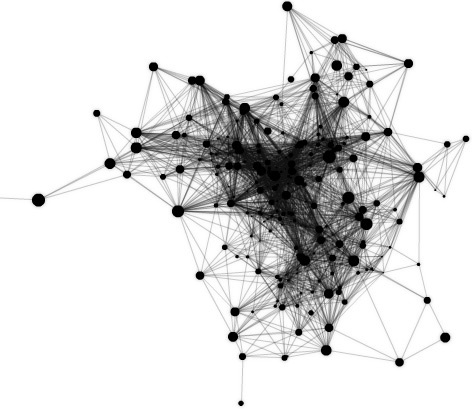
One of the topics of conversation that frequently comes up during conversations about career ladders and professional development is networking. I'm one of those who learned far to late in my career the power of strategic networking.

You may be asking yourself what is strategic networking? Networking is the activity of connecting and communicating in a non-hierarchical manner. It is generally accepted that there are two types of professional networks; functional and strategic.

The network I'd like to stress is very important to create and nurture is your Strategic Network. This is a group of colleagues whom you have come into contact with or specifically sought out because of their place in business. They likely have little to do with helping you achieve the objectives of your day job.

It's helpful to ask what do strategic networks provide? They expose you to areas of business inside and outside of your employer. This is something a functional network isn't capable of providing. Members of your strategic network include mentors who can sit on your personal board of directors. Your personal board should help you identify blind spots, reflect on your behaviors and accomplishments and expose you to new opportunities. The best relationships within a strategic network are when there is a strong 2-way exchange of the above benefits.

If you operate within a matrix organization in order to achieve your deliverables you are likely very familiar with a Functional Network. The individuals you connect with and attract to your teams to deliver on project objectives constitute a network by individual function. These too are networks of non-hierarchical relationships. We often refer to these as cross-functional teams - colleagues from diverse functions brought together to achieve a specific objective. This type of network is also referred to as Operational, (Ibarra & Hunter, 2007, HBR).
image courtesy of levitated.net

One example of individuals within my strategic network are those with which I've done significant business with in the past. Our transactional relationship has long since passed and now we remain in contact out of personal self-interest and mutual respect. Just as with a long-time good friend, it's necessary for you to take an active part in keeping the relationship alive. As I reflect on the individuals in my strategic network it is true to say that these people are the most diverse and valuable of my acquaintances.

What are your experiences and thoughts on strategic networking?

Tuesday, July 30, 2013

Join my Ignorance Abolitionist movement

Do you have what it takes to be an Ignorance Abolitionist?


Perhaps you say, "Just what is that good Sir?"

First, ignorance is not a derogatory term. It simply refers to the lack of information. I won't bore you with the Miriam Webster definition.

Figuring out what course to take is often the hardest task. You have options. You might not even know all the options, or the additional information you need to judge the options. An ignorance abolitionist helps colleagues fill those gaps in relevant information.

As a leader and advocate of abolishing ignorance you help people draw maps. Maps to find things. Maps to obtain additional information. You also help people draw maps that lay out the course to achieve a vision or fulfill and sustain a mission. When you can't make the uncertain certain, a map will help you find a way.

It's about sharing what you know - not protecting it, hiding it, and pulling it out only when YOU need it. You share it in order to help others.

It's also about engaging with colleagues who may have relevant information. Not waiting for them to push it to you. Or worse, going off and designing a solution in a vacuum without seeking out information. An ignorance abolitionist seeks that information out, pulls it from those who may have knowledge, experience, valuable insight and different perspectives on the topic.

Most important though to seeking out information is to speak with those who might not share your views or agree with the current map or path to a solution. Yes, I'm invoking a well know behavior of President Abraham Lincoln, who actively engaged his political opponents before embarking on bold decisions.

And be aware of those who might not understand your approach and may even feel threatened by your style of engagement. They may wish to protect their information and not share important insight as a means to preserve their power and position. Also be weary of the senior leader who objects to sharing information, often in subtle and hard to detect ways, because he may not believe in the objective and the stated path to achieving it. Thus not wanting to actually help you and your colleagues succeed.

I hope you would agree that this way of thinking about abolishing ignorance in the course of meeting goals and objectives is an important aspect to being an effective leader.

Will you join my movement?

Friday, June 21, 2013

Part 3 on Interviewing

I came across this on Monster and have to say the "what you can do" advice is pretty good. Essentially you have the ability to take control of the interview process, specifically if the interviewer isn't prepared and asks very general questions. The better you are at doing this, the more likely it is you'll be seen as a stronger candidate over your competition.

Bottom line. If you have only a precious 30-45 minutes with a hiring manager or co-interviewer you should be in the driver seat - not the interviewer. Watch the clock - make sure you have a space near the end to ask questions of your own. And critique yourself as you move from one individual to the next. Have I got my key strengths across? Have I left the interviewer with a good idea of what it is I will bring to the role and the organization? What didn't go well, or did I stumble on? How would I answer that same question if asked again with a better response?

I can think of one such interview in my recent past where I wish I would have read this previously and had time to prepare.

Put the time in preparing for the interview:
  • Understand the job description (JD) and prepare questions ahead of time where you want more clarity.
  • Using the JD prepare examples from experience of how you are a good fit for the responsibilities. Rehearse your examples.
  • Using the JD understand where you might be perceived as weak in experience or skills and think ahead on how to answer questions - be honest though! Being honest about your lack of experience in a particular area should be viewed positively. If it's not you might be better off not being in that organization.
  • Research ahead of time the firm and it's past and future direction from news outlets, blogs and investment websites - I find reviewing Tax statements, 10-K's and other financials insightful. If you have limited time focus on the 10-K and the sections where Business and Risk are discussed.
  • If you're fortunate enough to know the names of the individuals you'll be meeting with look them up on LinkedIn and Google. Be careful about how you use what you find - exploring personal details of an interviewer in discussion might be alarming to the interviewer.
Want more? Consider reading a few of my previous posts on this topic. Are you an effective interviewer and the 2-Way of the Interview Process.

Tuesday, June 18, 2013

Why our leaders need to think like record producers

Phil Ramone
We all have our favorite musicians, artists and song writers. Think of that one body of work from one of your favorite artists that you never tire of playing start to finish. It's likely you feel that the group of songs is a wonderfully intricate yet cohesive exploration of the boundaries of their musical talents. Every song delights you, inspires you and is a treat for the ears. Or you simply love the set of songs because they move you and brighten your day.

Now think of that album you bought because you liked one or two of the songs, only to be disappointed after hearing the rest. Are you wondering why there are only a few songs that seem to belong amidst others that are banal, uninspiring and never worth hearing twice?

What makes for an exceptional artistic studio album?

An exceptional body of music is a combination of many things including the musicians, the equipment, the studio environment, the quality of the song writing and the record producer. Yes, the Producer - and you thought they were just another name on the liner notes.

In fact the producer is a critical component of any successful music production process. A producer wears many hats but he or she is ultimately charged with ensuring all the things that contribute to an exceptional artistic work are orchestrated at the proper time and within balance. Notice I didn't say "with perfection".

I've been fortunate to be a musician and have spent time in the studio with both effective and ineffective producers. Once without any producer, which in hindsight was worse than simply having an ineffective producer - the results were far from stellar. In reflecting on my experiences there are some interesting parallels to effective business leadership worth discussing.

First it's important to recognize not all producers operate in the same manner. Some are in fact orchestrators of musicians, session artists and music machines intent on creating a product that sells records simply for the sake of selling records. There is no art in this example, and usually no team of individuals working for a higher level of artistic impression.

Instead let's discuss the type of record producer that is intent on ensuring the artist has all the right elements necessary for the individual or band to achieve musical greatness. What are some of the parallels for effective leaders of business?
George Martin


The producer runs interference with the record company so the artists can concentrate on their art. Record companies are profit seeking businesses. Just like any business they continually strive to lower operating costs and meet important deadlines while extracting as much productivity out of their existing resources (the musicians) as possible. Artists, who typically don't come from a business background would be overwhelmed with the pressures of producing music, staying within budget for studio time and of course meeting deadlines so their music can be released at optimal times. A good business leader also runs interference between their team and the pressures coming from higher levels of the organization so colleagues are able to focus on delivering an exceptional product or service.

Roger Waters
The producer is a coach first and foremost. Artists can be an emotional roller coaster in the studio. Having significant creative strength as left-brained humans stuck in a right-brained dominant world leads to stress and uncertainty that hinders the creative process. The producer as coach smooths out those edges and gives emotional and spiritual support. Not all musicians are created equal. Each is different in personality, talents and experiences. A good producer is able to coach based on the individual. As in the creative studio environment effective coaching is essential in the business world. Leaders who lack the ability to effectively coach their direct reports through challenging situations will simply find performance is never exceptional. And those that coach using a one-size fits-all approach will never have a team of properly motivated individuals.

The producer co-creates and also serves as a guide for the vision for the artists final work. A good producer is a visionary and maintains the creative direction for the body of work. This keeps the musicians on the right path ensuring the end result is coherent, complimentary and delivers a product that will delight the listeners ears. In the business world we recognize leaders who are visionary and able to lead their teams to delivering exceptional results. We also applaud those leaders who co-create that which the organization aspires to be - the vision. In contrast leaders who create that vision in a vacuum without their organization's input are viewed as autocratic and transactional. This can be very demotivating for the individuals not to mention it can result in a vision that is short-sighted or simply ineffectual.
David Gilmore

The producer is intent on ensuring the artists work is the best that it possibly can be. One of the more important aspects is for the producer to challenge the artists, their song writing and musical abilities. She pushes the artists to stretch, grow and realize higher forms of artistic expression. This is not unlike a good leader challenging her team to develop themselves and achieve their full potential. 

The producer also creates an atmosphere conducive to the creative process incorporating input and ideas from all of the artists, not just the primary song writer. The producer assures all of the artists involved understand that they are mutually responsible for the final product. There can be no hidden agendas, no desires to outshine or alienate fellow musicians for selfish reasons. And it is the same in business. The leader who establishes a team that is mutually accountable for the results of the team is more likely to be successful. In business we recognize that the leader who embraces a mutual learning approach, incorporating ideas and information from her team, is much more likely to achieve exceptional results.

Now think of the end result of that musical masterpiece. In the music industry it's the artist who receives all the praise, adoring fan base and financial rewards. The producer sits quietly behind the scene happy in knowing he made it possible for that artist to achieve greatness. Of course there is also a financial award, but as with great business leaders that is rarely the primary motivator. And who does the artist thank on the stage at the Emmy ceremony besides their mother? You guessed it - the producer. The individual who helped them get there by realizing their artistic greatness. It's the leader who enables their team to achieve greatness, let's them present it to the organization and enjoys a happy moment when they are recognized who is truly indispensable.

Brian Eno

The producer also receives something else that has parallels in the business world. They get recognition from other artists wanting to work with them on their next production. It is the same in the business world. We've all come across leaders we sit back and remark on who are exceptional at connecting with us as individuals. We'd love a chance to work with, or even for them on their team. It is the same in the music industry. What you create as an enabler of talent and exceptional results resonates with the people around you. In the music world they want your help on your next album. In the business world you want to be part of their next endeavor. You want to follow them because you know they can lead you to greatness.

Image of Phil Ramone courtesy of Berklee Jazz. Image of Brian Eno courtesy of polymathperspective. All other images via Wikipedia.

Wednesday, March 27, 2013

Coaching: Functional excellence without wisdom and experience

Can you share your experiences on what works in such a situation? Or perhaps what hasn't worked for you in this case?

How would you coach this individual?

Envision the Gen-Y knowledge worker or under-30 professional with less than 5 years of experience. This individual is consistently exceeding expectations in her role. In fact it's not difficult for this individual in this case because the functional aspects of the role are in some ways junior to her given abilities. She's driven to achieve, serve her customers and takes initiative. She continually seeks to address and resolve the uncertainties. Her fellow coworkers enjoy her presence and have a positive opinion of her work ethic and style.

However, she lacks the element of wisdom and maturity that we might agree comes from "time in the seat" and more years of experience dealing with challenging situations, interesting problems and difficult personalities.

This person has career ambitions for title and compensation in parity with her level of passion for her work. She sees herself as working at a level on par with that of colleagues in the same function, but significantly more experience.

Add to this leadership challenge the reality of the current organizational environment. The organization is shrinking. The primary strategy for retaining market value is to lower operating expenses over an extended period of zero growth in revenue. Requesting and winning bumps in title and pay for star performers has never been more difficult, let alone for a very junior colleague.

What would you do to coach this young professional? How would you keep them engaged and positive and understand that the reward will come, it's just too soon?

My approach would be to help this colleague find challenging projects and objectives that take them out of their comfort zone. If they succeed and have a net-positive level of success over a given period then they are rewarded. A shrinking organization can offer plenty of these opportunities if you're paying attention.

Thursday, March 21, 2013

No request for help? Probably due to lack of intent.

Today I was reading up on industry executives and thought leaders and again came across a post on Inc that was simple yet informative.

The article lists a set of questions "extraordinary people" ask everyday of their colleagues, friends and family. One, rather critical question, if absent can explain why things aren't improving.

The question I'm referring too is "Can you help me?"

This question, from a manager to direct reports, is extremely revealing. As the article discusses it demonstrates comfort with vulnerability.

The question, or lack thereof, also demonstrates a more important concept - intent. And I mean intent to improve. Intent to be better. Intent to serve the organization.

Without intent the request for help will be absent.

And it follows that feedback, no matter how constructive or comprehensive, is likely to be ignored.

So when you reflect on the feedback you've provided and then become puzzled by the lack of activity or movement in a better direction, ask yourself, "Were they really asking for it in the first place?" If they weren't really asking for help, should you be surprised that they aren't motivated to act on your feedback?

Probably not.

The Inc article.

Thursday, March 14, 2013

Firefighting: Reactivity, Pro-Activity and the Empowerment Contradiction


If you are still managing to the emergency and not leading to anticipate the future, you can't possibly expect your organization to remain relevant.

Rolling up your sleeves and diving in to help your people put out the growing fire should be the exception, not the norm. When fire fighting becomes the norm you and your organization are doomed.

Fire fighting also limits your team's ability to interject innovation into the development of a solution because the pressure is on to get the line running again, or re-work and ship to avoid a stock-out, and on and on. No time is possible to brainstorm, greenhouse and evaluate more optimal solutions.

You need to support your colleague's efforts to transition to pro-activity. This starts by not trivializing the level of work they are handling today, and the extent to which fire fighting is killing productivity. Instructing them to work smarter or do a better job of prioritizing is deflecting accountability and hiding from your responsibilities as a leader to help your team.

A compounding factor is what I term the empowerment contradiction. This type of contradiction is never more evident when colleagues get trapped in reactivity. You shouldn't in one breath state your people are empowered, and in the same sentence state they can never say no to a need or customer without first having your permission. The contemporary manager would never think of verbalizing such a contradiction. What I have seen happen however is colleague decisions to prioritize are challenged and undermined by autocratic managers who have an angry customer on their back.

If, on the other hand you enjoy fighting fires and want to make all of the decisions then put on your gear, grab a hose and look for smoke. Leave the leadership and pro-activity to those who have a passion to serve others.

Thursday, March 7, 2013

Guide Posts: Cultivate those informal mentors

Last night I found myself burning the calories away on the spin bike in the gym. As often I do my mind wandered, from the task of turning up the resistance at regular intervals, to contemplating my career path.

I was reflecting on how I would describe a good friend of mine. Why? Because he is someone that has always impressed me as "having it all together and happy." As I've gotten to know him better my impressions have only improved. He's attained a higher level of his own sense of self and the world around him. I find it helpful to have this type of person in mind when reflecting on my own behaviors and perceptions, and what may be holding me back.
 
This individual has achieved what you might associate with the concept of spiritual enlightenment. He is adeptly in tune with his inner being and his purpose. He's "found his center" as I like to say. His work is diverse and truly art, he gives lots of gifts (in the true Seth Godin sense) and lives to serve those lucky enough to be around him. He's extremely mindful of the space he's occupying and a-tuned to those in his presence. I always get a sense from him that he truly relishes interaction, discussion and contemplation with other human beings.

For me this individual provides a guide post for my path in life. Why not a target? Probably because I do have a sense of self and I'm happy with who I am. I don't have to be the mirror of him for me to achieve my own high level of personal enlightenment. I do know that as I continue my journey I will frequently ask myself, "what would he do in such a situation?"

Do you have someone like this? An informal mentor might be one way to describe our relationship. Perhaps you can think about this next time you meet that next interesting individual. Ask yourself "would they be a good guide-post for me personally and/or professionally?"

Friday, March 1, 2013

The unintended consequences of Organizational DNA: Part 1

I'm going to go further on a future post to expand upon why this brief quote I found has significant meaning to me. If you've rebelled against the mold or 4-sided box your management has continually tried to force you into, then it should resonate with you.

But don't take my word for it. In fact, be critical and challenge me if you disagree - we both might learn something.

I would assert that organizational DNA is often the enemy of an innovation culture.

"Productivity, predictability and alignment are embedded in the marrow of our management systems. Experimentation, risk-taking and variety are the enemy of the efficiency machine that is the modern corporation. Of course it's variety, (and the daring to be different) that produces game-changing innovation." ~ Polly LaBarre


It is the 'predictability and alignment' aspects of my current organizational DNA that simply crushes my spirits and will to exceed.

Stay tuned.
xperimentation, risk-taking, and variety are the enemy of the efficiency machine that is the - See more at: http://www.mixprize.org/blog/announcing-innovating-innovation-challenge-winners?utm_source=MIX+Fix&utm_campaign=e3c14939f2-The_MIX_Fix_Mar_01_2013&utm_medium=email#sthash.at0PT1Hw.dpuf
Productivity, predictability, and alignment are embedded in the marrow of our management systems. Experimentation, risk-taking, and variety are the enemy of the efficiency machine that is the “modern” corporation - See more at: http://www.mixprize.org/blog/announcing-innovating-innovation-challenge-winners?utm_source=MIX+Fix&utm_campaign=e3c14939f2-The_MIX_Fix_Mar_01_2013&utm_medium=email#sthash.at0PT1Hw.dpuf
t’s a product of organizational DNA. Productivity, predictability, and alignment are embedded in the marrow of our management systems. Experimentation, risk-taking, and variety are the enemy of the efficiency machine that is the “modern” corporation. Of course, it’s variety (and the daring to be different) that produces game-changing innovation - See more at: http://www.mixprize.org/blog/announcing-innovating-innovation-challenge-winners?utm_source=MIX+Fix&utm_campaign=e3c14939f2-The_MIX_Fix_Mar_01_2013&utm_medium=email#sthash.at0PT1Hw.dpuf
It’s a product of organizational DNA. Productivity, predictability, and alignment are embedded in the marrow of our management systems. Experimentation, risk-taking, and variety are the enemy of the efficiency machine that is the “modern” corporation. Of course, it’s variety (and the daring to be different) that produces game-changing innovation. - See more at: http://www.mixprize.org/blog/announcing-innovating-innovation-challenge-winners?utm_source=MIX+Fix&utm_campaign=e3c14939f2-The_MIX_Fix_Mar_01_2013&utm_medium=email#sthash.at0PT1Hw.dpuf
It’s a product of organizational DNA. Productivity, predictability, and alignment are embedded in the marrow of our management systems. Experimentation, risk-taking, and variety are the enemy of the efficiency machine that is the “modern” corporation. Of course, it’s variety (and the daring to be different) that produces game-changing innovation. - See more at: http://www.mixprize.org/blog/announcing-innovating-innovation-challenge-winners?utm_source=MIX+Fix&utm_campaign=e3c14939f2-The_MIX_Fix_Mar_01_2013&utm_medium=email#sthash.at0PT1Hw.dpuf"

Saturday, February 9, 2013

When collaboration fails, re-evaluate your approach

Let me relate a story of learning how to be a better leader by anticipating the audience. This is a story about an attempt to collaborate that resulted in failure.

I recently engaged two of my senior leaders in a discussion intended to identify a colleague or organization most likely to lead our firm to compliance for an evolving external requirement. It didn't go as planned and I can't even regard it as resulting in even marginal success given the intent. But I learned something important.

The leaders were Jean and Bob and I organized a 30 minute session during their busy schedules. In hindsight this was not long enough given my approach.

I introduced the need and got about 60 seconds into describing the situation. This was about as long as Bob could hold himself back from taking control and trying to drive the conversation from 40k feet to 4 feet - to a level where he could understand the most granular of facts and contemplate their implications. Here is where I started to fail. I followed him down to 4 feet, out of respect to his seniority and a genuine belief that I could get us ascending again. I also setup this meeting specifically intent on dispelling Bob's perception of me as a recluse. Truth be told I shun his involvement in most things as I'm often left disappointed and left feeling micro-managed. He knows this because I've told him and it contributes to his "shortness" with me.

I did not want a definitive answer. I just needed to confirm my direction and hopefully gain insights to the need that are hidden from me at my level.

However every attempt I made to try and get back to the high-level conceptual problem to fully explain it and seek feedback was met with resistance. Jean, despite her best intent didn't offer to help me get there either.

To use a simple analogy I was the shark that beached itself in pursuit of an illusive prey. I thought I could snatch that small fish in my jaw before hitting the shore. I couldn't and kept swimming after it. Now floundering on the shore, no meal in my stomach, with no way to get back into the water.


We exited the short meeting and I couldn't help but try and contemplate what went wrong for the remainder of the day. It wasn't until I stopped blaming Bob and Jean and started to reflect on my behavior that I was able to resolve it with something constructive.

I recognized I need to do several things next time:
  1. I can't expect Bob to embrace my way of thinking so I have to do a far better job of mentally preparing for Bob's style of management. What this means specifically is to consider the future topic and the extent to which Bob is going to drive the discussion in a less than useful direction.
  2. Did Jean really understand what I expected to get from the 30 minute conversation? Probably not. I should illicit support ahead of time from colleagues such as Jean. I actually did this, but not to the point of ensuring Jean would support keeping the conversation at the appropriate level and focused on uncovering insights hidden from me.
  3. I should consider giving Bob what he needs to process the topic ahead of the conversation. Sure, he wants facts because that's how he operates and makes decisions. I expected his inputs to be directional and on a conceptual level but he wasn't prepared to comfortably discuss the need in that context. If I feed him content ahead of time, there might be less resistance to keep the conversation at the level I need.

I'm going to try this next time and report back as to my success or failure. If I again fail we can re-examine the approach once again.

Monday, February 4, 2013

Are you an effective interviewer?

Are you an effective interviewer? Are you?

Don't be too quick to answer in the affirmative. However this post is really meant to help the potential candidate.

Why is it important to be aware of the style and subsequent effectiveness or ineffectiveness of the interviewer?

I believe you can actually determine if you're going to get a fair chance at receiving an offer based on the interviewers style, in particular that of the hiring manager. But there is a far greater implication - that of the inexperience and/or dysfunction of the hiring manager or leaders of the organization and your ability to evaluate their organization.


As you progress though the interview is he waffling? Does she seem uncomfortable? Are they unsure of their line of questions? Are they just having a somewhat related polite conversation and not really trying to explore your persona and experiences?

I've experienced all of these in recent years. An interview is as much an opportunity for you to determine if you are a good fit for the organization as it is for the organization to affirm the same of you. This is what I want you to take away from this post. You should be evaluating them as well and if the discussion isn't proving productive take opportunity to redirect.

Granted not all people are good at interviewing prospective candidates. I've been surprised by the apparent lack of effectiveness by some senior executives. One conversation with a senior director of HR comes to mind. This person was uncomfortable, wasn't prepared and never gave me an opportunity to really tell my story. Regrettable really because HR, for better or worse, has significant influence over the candidate selection process in many organizations.

On the positive side, I've concluded interviews where I came away feeling energized and enthusiastic about the hiring manager, the opportunity and the organization. I was able to tell my story and also explore the possibilities and potential of the role as I was evaluating the interviewer.

No matter how sweet the prospective role may seem you should be evaluating the interviewers constantly. Ask yourself if the questions they are asking are giving you an opportunity to tell your story and how you can impact the organization. Are their questions directed at peeling the onion that is your collective experiences and talents?

If they aren't you should have pause for concern. If you believe you want the role and would be a good fit you should have an idea of how to redirect and channel the discussion to one that favors you - to one that will leave them with a clear understanding of who you are and what you will bring.

Don't be fooled by the relative ease of the conversation. If it's not directed at discovering you, then the interviewer is going to be left with making judgements about you and your fit for the role that are beyond your ability to influence.
 
I would hope you are also asking yourself the important question - is this organization right for me? if I'm the one who is clearly better at extracting and communicating value and experience, will I be able to learn and grow in the new role?

Conversely, if you truly want the role after redirecting the apparent dysfunction, you'll be doing the hiring manager a favor. You may also be giving yourself an advantage over other candidates.

How can you tell post-interview process if you've been the victim of ineffective interviews?

Easy!

Reflect on the conversations. Did you get to tell your compelling stories? Were you able to answer questions with illustrative examples of how you persevered and triumphed over adversity? Were you able to engage the interviewer or hiring manager in discussion on the scope of the role and future opportunities? If not, you might have wasted your time.

Ask for feedback and an explanation of why you didn't get the offer? It's important to be sensitive in your approach. After all, a hiring manager doesn't want to be put on the defensive regarding their decision. If they do you're not likely to get any valuable feedback. If you are polite and genuinely interested in your delivery of the question and the hiring manager ignores you or refuses to comment, that in my mind is a pretty clear sign that you've just been unfairly reviewed.

Granted most HR professionals and managers understand they are in no way obliged to provide feedback. Another point in your favor however. If they don't give feedback out of respect for you as a professional, perhaps you don't want to be working for such a person or organization in the long run.

Monday, January 28, 2013

Transform or cease to be relevant

I was recently reading one of Seth's great posts about what organizations can learn from Airports.

I think he's spot on. My own organization has a long way to go before it's truly "transformational". However I can attest to the fact that most of his observations are really not part of where I work.

A good thing.

But it got me reflecting on the lack of business travel for my role over the recent period. Budget constraints played a large part in the reduction of my business travel over the last 12 months - analogous to the patent expiry cliffs we've been dealing with, my drop in travel was much like a cliff - oodles of flights with over 70k miles per year down to ZERO.

Over the last 12 months I have several cases where I specifically avoided a plane ride and the airports because of the shear level of dissatisfaction, coupled with the non-value added extra travel time and exorbitant air fairs. I wish our rail system in the US was like that of Europe. Perhaps it would serve to transform airports and airlines to be about delivering delight and happy and relaxed business and leisure travelers. You know a boost to the US passenger rail capabilities could create a "transform or die" environment for the airlines and airports. The biggest losers with this possibility would be the aircraft suppliers and airlines, whom we could expect would expend serious lobbying funds to thwart a railway comeback rather than invest in a better passenger experience.

Rather than transform to remain relevant they would fight to keep things as is. Of course the optimist in me hopes for some disruptive innovator to come along and give the airline industry no choice but to transform or die.

Monday, January 21, 2013

Communicate like a Great Leader

Can you communicate effectively in that new role you just earned? George Anders provides some useful  thoughts in his recent blog post. I would make a habit of reflecting on your daily behaviors and ask yourself "have I been communicating with these ideas in mind?"

Mr. Anders ideas fit within Kouzes & Posner's 5 Leadership Practices which are Model the Way, Inspire a Shared Vision, Enable Others to Act and Encouraging the Heart. Their book, The Leadership Challenge, I highly recommend. It serves as a very effective framework for the transformational leader and is based on years of research and insight.

Friday, January 18, 2013

A recent epiphany...

One of Seth Godin's recent posts inspired me to share something with you. I was at a Track and Trace conference in Washington, DC last Fall and had one of those moments he is referring to - although mine was more personal in experience. I had that striking realization you would consider true to the definition of an epiphany. 

At this conference I suddenly recognized what was happening and how my extroverted approach resulted in what Seth would describe as the "exchange of gifts". To understand what Seth means by "gift" you should read one of his books, such as Linchpin. Or, perhaps faster would be to read some of his blog posts such as this one.

This approach has always worked for me. It's natural and often resulted in the creation of new relationships and some that have lasted a very long time. Attending conferences such as this in our current financial environment at my employer are a luxury. I made a point at this conference to get around and meet as many of the industry professionals as I could, exchange business cards, and then keep in touch to share ideas and stories after the conference.

The attendees included big-pharma (my employer) but also a lot of small and medium-size pharmaceutical and medical device manufacturers. It's quite predictable, as soon as you sit down at a table of attendees and introduce yourself, you can read the expressions and what they are asking themselves. "I have to watch what I say because here sits someone from my largest competitor." "Why is he sitting here and introducing himself?" "What is it he's trying find out that we should be cautious about discussing?"


How do you break the silence and get people to feel safe in opening up to you? Answer: You share! And don't start by sharing the successes you've had in an arrogant manner. Share the failures, your struggles with the environment, the hurdles you face or expect to face. Give gifts.

It works. People open up. You will be surprised by the results; the sharing of stories, active discussions about what the presenters were telling us and we learned from each other. Perhaps even more important, the colleagues I connected with left with an impression of me and my genuine desire to collaborate for the betterment of our industry. I was no longer "that guy" from the big giant pharma company who thinks everyone needs to listen to him...just because he's from the big giant pharma company.

They are now in my collective network as colleagues.